
Table of Contents
- Why Reactive Skin Needs a Different Anti-Aging Approach
- Gentle Anti-Aging Ingredients for Sensitive Skin
- How to Repair Skin Barrier for Aging Skin
- How to Introduce Retinol to Reactive Skin
- Product Comparison: Best Anti Aging for Reactive Skin
- Building a Daily Routine That Respects Your Skin's Limits
- Conclusion: Matching the Formula to Your Skin's Needs
- Frequently Asked Questions
Last Updated: October 4, 2026
Why Reactive Skin Needs a Different Anti-Aging Approach
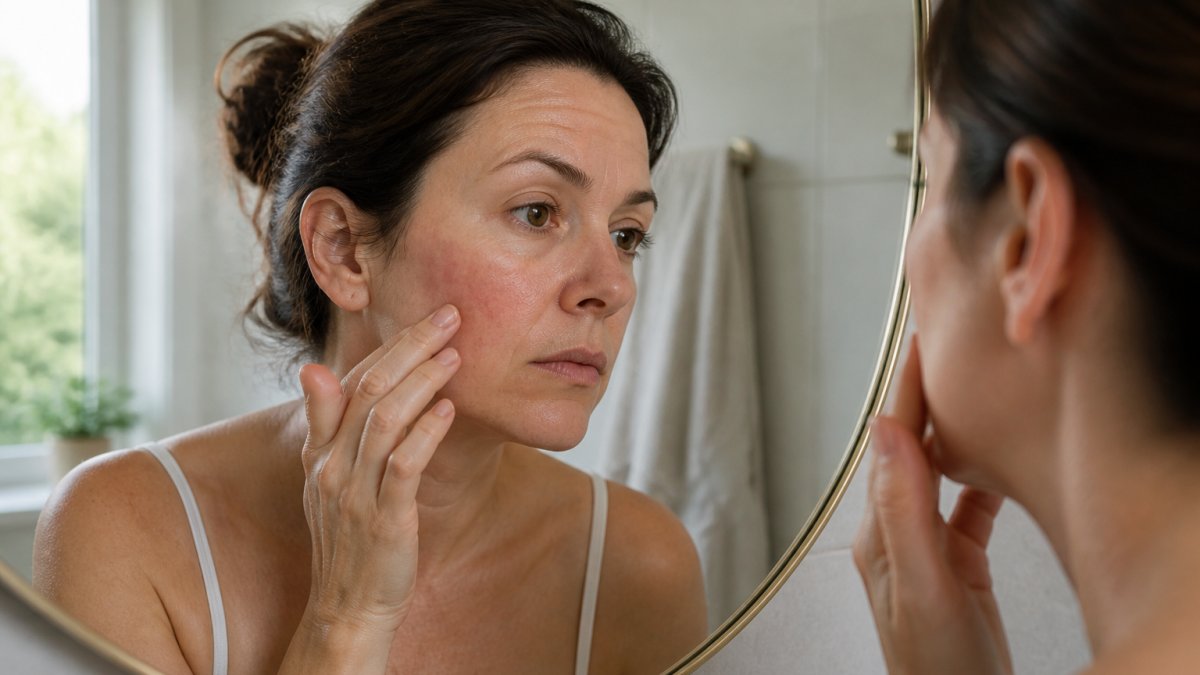
Reactive skin needs a different anti-aging approach because its barrier is already compromised, and many anti-aging actives make that worse before better. This GALYNA guide covers how to find the best anti aging for reactive skin without triggering the redness, stinging, and flaking that send most people back to square one.
A compromised barrier loses water quickly and lets in irritants healthy skin would shrug off. Retinoids, acids, and high-dose vitamin C speed cell turnover, what aging skin wants, but also thin the outer layer short-term, which reactive skin cannot afford.
The goal isn't avoiding actives. It's rebuilding the barrier first, then introducing actives slowly enough that your sensitivity threshold never gets crossed.
Gentle Anti-Aging Ingredients for Sensitive Skin
Here's what each one actually does, and where reactive skin needs to adjust the standard advice.
Ceramides are the lipids making up roughly half the barrier's outer layer; reactive skin is typically low in them.
Niacinamide supports barrier repair and calms visible redness by supporting the skin's own lipid production.
Hyaluronic acid pulls water into the upper layers without irritation, but it's a humectant, not a moisturizer.
Bakuchiol is a plant-derived alternative many reactive-skin users tolerate when retinol is too much.
Antioxidants matter for photoaging defense.
Look for formulas labeled fragrance-free, hypoallergenic, and non-comedogenic. Those three labels do more for reactive skin than any single active.
Ingredient Synergy: What to Layer Together and What to Separate
Layering order is where reactive skin thrives or flares, because some pairings buffer each other and some amplify irritation.
Layer together (synergistic):
- Niacinamide + ceramides, niacinamide supports lipid production while ceramides replace what's missing; the backbone of a reactive-skin barrier routine.
- Hyaluronic acid + occlusive cream, the humectant pulls water in, the cream seals it. Never use HA alone on reactive skin.
- Peptides + niacinamide, both low-irritation and complementary; peptides signal collagen while niacinamide calms redness.
- Antioxidant (AM) + sunscreen, antioxidants reduce free radical damage; sunscreen blocks the UV that generates it. The single highest-value anti-aging move for reactive skin.
Separate or buffer (antagonistic):
- Retinoid + exfoliating acid, never on the same night. The combination strips the barrier faster than it can repair.
- Vitamin C + retinoid, use vitamin C in the morning and the retinoid at night. Layering both at once is a common cause of flares.
- Niacinamide + high-dose vitamin C, the old "they cancel out" claim is overstated, but at high concentrations the combination can flush reactive skin. If you want both, use them in separate routines (AM/PM).
The buffer method: apply a thin layer of moisturizer first, then the active on top. This slows absorption and cuts irritation without eliminating the active's effect, the single most useful technique for reactive skin.
Ingredients to Avoid When Your Skin Is Reactive
Fragrance, essential oils, denatured alcohol, physical scrubs, and high-percentage glycolic or salicylic acid peels are the usual flare-up culprits, as are "cooling" products with menthol or peppermint oil. If your skin is currently reactive, strip the routine to basics and add things back one at a time.
One caveat: "fragrance-free" and "unscented" are not the same label. Unscented products can still contain masking fragrance, so for reactive skin look for the words "fragrance-free" specifically.
How to Repair Skin Barrier for Aging Skin
Repairing the skin barrier for aging skin comes down to three moves: stop stripping it, feed it lipids, and give it time. Most people skip the third step and wonder why nothing works.
Switch to a pH-balanced, fragrance-free cleanser and lukewarm water, hot water and foaming cleansers dissolve the lipids your skin needs. Layer a humectant like hyaluronic acid under an occlusive balm or cream; lanolin and ceramide-rich creams work well.
At GALYNA, our approach to barrier repair centers on patented lipid delivery technology, which is designed to carry active ingredients deeper into the skin rather than letting them sit on the surface. Our REPAIR Healing Balm pairs hemp extract with naturally derived lanolin to support the appearance of smoother, healthier-looking skin on dry patches and rough texture.

How to Introduce Retinol to Reactive Skin
Introduce retinol to reactive skin at the lowest available concentration, once every third night, applied over a moisturizer rather than under it. This "buffering" method slows absorption and cuts irritation dramatically.
Why buffering works: the moisturizer creates a partial barrier, so retinol releases more slowly and in lower effective doses per application.
A workable ramp looks like this:
- Weeks 1-2: retinol once every third night, buffered
- Weeks 3-4: every other night if there's no stinging or flaking
- Weeks 5-8: nightly, still buffered
- Beyond week 8: adjust strength before adjusting frequency
If your skin reacts at any stage, drop back one step and hold there for two weeks.
Choosing a starting strength: for reactive skin, start with a retinol ester (retinyl palmitate or retinyl propionate) or an encapsulated retinol rather than straight retinol or retinaldehyde.
DREAM Night Rejuvenating Crème (Classic Jar) →
If retinol is off the table entirely: some reactive skin never tolerates a retinoid, even buffered.
Patch Testing and Introduction Protocol
Patch testing matters, and most people do it wrong. Apply a small amount behind your ear or on your jawline and wait 48 hours before committing to your full face. A reaction means stop; no reaction means proceed to the ramp above.
When introducing any new active, not just retinol, follow this sequence:
- Patch test for 48 hours.
- Introduce one product at a time. Wait two weeks before adding the next.
- Start at the lowest frequency (every third night) and the lowest concentration available.
- Buffer under moisturizer for the first four weeks.
- Keep the rest of your routine boring and unchanged during the introduction window so you can isolate what's causing a reaction.
What to Do When You Flare
Even with a careful ramp, reactive skin flares. The recovery protocol is always the same: stop all actives, return to a bare-bones routine of gentle cleanser, moisturizer, and sunscreen, and hold for 7-14 days until stinging and redness resolve. Then restart the active at the step before where you flared and hold two full weeks before advancing.
The mistake most people make is restarting too soon or at the same step. A barrier that just flared needs time to rebuild its lipids, restarting early usually produces a second, worse flare.
Product Comparison: Best Anti Aging for Reactive Skin
The best anti-aging routine for reactive skin pairs a barrier-repair product with one gentle overnight treatment, then adds targeted care only where needed. Below are the GALYNA formulas we'd build that routine around.
| Product | Price | Size | Primary Role | Best For |
|---|---|---|---|---|
| DREAM Night Rejuvenating Crème | $51.00 | 1.7 fl oz | Overnight collagen and hydration | Fine lines, loss of firmness |
| REPAIR Healing Balm | $55.00 | 1.7 fl oz | Barrier rescue and repair | Dry, cracked, compromised patches |
| Essentials Mini Ritual | $50.00 | 3 x 0.4 fl oz | Complete trial routine | Testing before committing |
DREAM Night Rejuvenating Crème: Patented Overnight Recovery
DREAM is our top pick for reactive skin that needs anti-aging results overnight, and it's the only formula in this comparison backed by a US patent. GALYNA scientists were awarded US Patent #12,337,054 for the DREAM Night Rejuvenating Crème.

Hemp extract and hyaluronic acid hydrate deeply while vitamins and antioxidants support overnight recovery.
The honest limitation: it's a night cream, not a treatment serum, so it works gradually. Pair it with the buffered retinol schedule above rather than expecting it to replace one.
REPAIR Healing Balm: Barrier Rescue for Compromised Skin
REPAIR is for when your barrier is already broken, not for preventing it from breaking.
It earns its place on dry patches, rough texture, post-procedure recovery, and the flaky areas that show up when you've pushed an active too far. It also helps fight infection in damaged skin, which matters when the barrier is genuinely open.
The drawback is texture: this is a rich balm, not a light lotion, so use it on targeted areas or as a final sealing step at night rather than all over the face during the day.
GALYNA Essentials Mini Ritual: A Complete Trial Set
The Essentials Mini Ritual is the smartest starting point if you're unsure which formula your skin needs. It bundles SOOTHE Relief Cream, REPAIR Healing Balm, and DREAM Night Rejuvenating Crème in three 0.4 fl oz mini jars for $50, a $60 value.
Every formula is built on our patented lipid delivery technology, and the set is classified as non-irritating in clinical trials. No parabens, no harsh chemicals, no artificial fragrances.
The catch: the jars are small. If you already know DREAM is your product, the full 1.7 fl oz jar is better value per ounce. The set is for discovery, not a full routine cycle.
Building a Daily Routine That Respects Your Skin's Limits
A reactive-skin routine should have four steps in the morning and three at night, each with a reason to exist. More steps mean more chances to trigger erythema.
Morning: rinse with lukewarm water, apply an antioxidant serum if tolerated, follow with a light moisturizer, and finish with broad-spectrum sunscreen of at least SPF 30.
Night: cleanse gently, apply your buffered retinol on scheduled nights, then seal with DREAM Night Rejuvenating Crème. On off nights, skip retinol and go straight to moisturizer.
Conclusion: Matching the Formula to Your Skin's Needs
Reactive skin doesn't have to choose between calm and anti-aging. It has to choose the right order: repair the barrier, introduce actives slowly, then stay consistent long enough to see results.
GALYNA builds formulas for exactly that sequence. Our DREAM Night Rejuvenating Crème carries US Patent #12,337,054 for its delivery technology, our REPAIR Healing Balm restores compromised skin with hemp extract and lanolin, and the Essentials Mini Ritual lets you test all three formulas before committing. Every product is clinically validated, pharmaceutical-grade, and designed for sensitive skin.

Start with the Essentials Mini Ritual and find the formula your skin actually tolerates.
Frequently Asked Questions
What is the best skincare brand for aging, sensitive skin?
The best brand for reactive skin aging uses clinically validated formulas with barrier-supporting ingredients. Look for products that are non-comedogenic, fragrance-free, and tested for sensitivity. GALYNA's DREAM Night Rejuvenating Crème holds US Patent #12,337,054 and uses patented lipid delivery technology to boost collagen without irritation. The Essentials Mini Ritual lets you trial three formulas before committing.
Which anti-aging ingredients are safest for sensitive skin?
Gentle anti-aging ingredients for sensitive skin include hyaluronic acid, niacinamide, ceramides, and peptides. These support barrier repair and hydration without triggering inflammation. Vitamin C derivatives like sodium ascorbyl phosphate are better tolerated than pure L-ascorbic acid. Avoid fragrance, essential oils, and physical scrubs. Patch test any new active before applying to your face.
How do I introduce retinol to reactive skin without causing redness?
Start with the lowest concentration available. Apply it once every third night, then increase to every other night if your skin tolerates it. Use a buffering method to slow absorption and reduce irritation. If you experience persistent erythema or stinging, stop and repair your barrier for two weeks before trying again.
How can I repair my skin barrier while still treating fine lines?
Barrier repair and anti-aging treatment can happen together if you prioritize ingredients that do both. Ceramides, hyaluronic acid, and niacinamide restore barrier function while supporting collagen synthesis. Apply a barrier-repair moisturizer before any active ingredient. GALYNA's REPAIR Healing Balm combines hemp extract with lanolin to protect compromised skin. Once your barrier is stable, introduce one active at a time.

