
Table of Contents
- What Lipid Delivery Technology Actually Does for Your Skin
- How Do Cosmetic Delivery Systems Work?
- Liposomes, Solid Lipid Nanoparticles, and the Rest of the Carrier Family
- The Benefits of Liposomal Skincare, Backed by Formulation Science
- The Science of CBD Skincare Efficacy and Why Carriers Decide It
- Safety, Side Effects, and What Lipid Carriers Do Not Fix
- Stability, Sourcing, and the DIY Question
- Frequently Asked Questions
Last Updated: October 2, 2026
What Lipid Delivery Technology Actually Does for Your Skin
Lipid delivery technology in skincare solves one problem: getting active ingredients past the skin's outer wall and keeping them stable long enough to work. This guide from GALYNA breaks down how cosmetic delivery systems function, why the stratum corneum rejects most formulas, and what separates a carrier that performs from one that just sounds scientific.

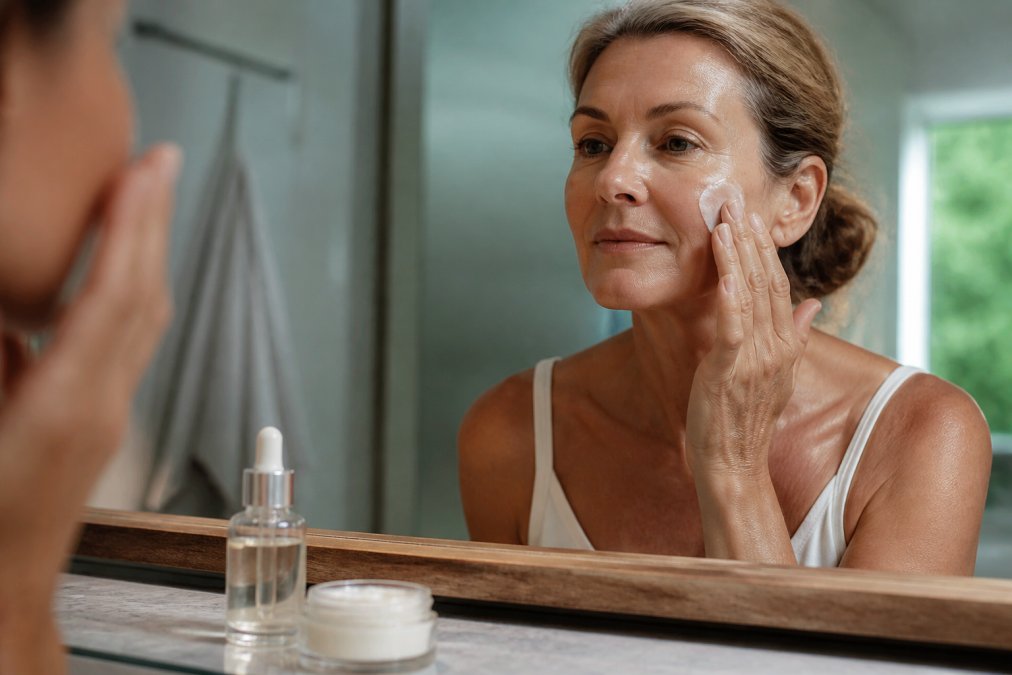
Why the Stratum Corneum Blocks Most Formulas
The stratum corneum is the outermost layer of the epidermis and the primary barrier against water loss and outside substances. Its intercellular space is packed with ceramides, cholesterol, and fatty acids in ordered sheets.
What a Lipid Carrier Is Made Of
A lipid carrier is a microscopic structure built from fatty materials that holds an active ingredient and releases it at or just beneath the skin surface. Common building blocks include phospholipids, triglycerides, waxes, and cholesterol.
How Do Cosmetic Delivery Systems Work?
Cosmetic delivery systems package an active inside a carrier that improves its stability, its ability to cross the skin barrier, or both. The carrier decides how much of the ingredient reaches living skin and how quickly.
Broadly, delivery systems fall into a few families:
- Vesicular carriers such as liposomes and niosomes, which enclose the active in a lipid bilayer
- Particulate carriers such as solid lipid nanoparticles, which trap the active in a solid fat matrix
- Emulsions and microemulsions, which solubilize oil- and water-soluble ingredients together
- Polymeric systems, which use synthetic or natural polymers for sustained release
Liposomes, Solid Lipid Nanoparticles, and the Rest of the Carrier Family
Liposomes and solid lipid nanoparticles are the two most studied carrier types in topical skincare. Liposomes carry both water- and oil-soluble actives; solid lipid nanoparticles offer better stability and controlled release.
Liposomes: The Original Encapsulation Vehicle
A liposome is a spherical vesicle with an aqueous core surrounded by lipid bilayers, so it can carry hydrophilic ingredients in the core and lipophilic ingredients in the bilayer at once.
Solid Lipid Nanoparticles and Nanostructured Carriers
Solid lipid nanoparticles (SLNs) are nano-sized particles of solid lipid that hold the active within a crystalline fat matrix. Because the matrix is solid at room temperature, the payload is better protected from degradation than in a fluid vesicle.
| Carrier Type | Best For | Main Limitation |
|---|---|---|
| Liposomes | Water- and oil-soluble actives together | Physical instability over time |
| Solid lipid nanoparticles | Protecting fragile actives | Lower loading capacity |
| Nanostructured lipid carriers | Higher loading, sustained release | More complex formulation |
| Emulsions | Solubilizing incompatible ingredients | Limited penetration benefit |
The Benefits of Liposomal Skincare, Backed by Formulation Science
The benefits of liposomal skincare come down to three measurable effects: better penetration, protection from degradation, and more even release across the skin. Encapsulation does not make an ingredient stronger, it makes more of it available where it needs to act.
The Science of CBD Skincare Efficacy and Why Carriers Decide It
CBD is the clearest case study for why delivery, not dosage, decides whether a lipophilic active does anything on skin. Cannabidiol is highly lipophilic, poorly water-soluble, and prone to degradation from light, heat, and oxygen; without a carrier it sits on the surface, oxidizes in the jar, or both. A lipid carrier solubilizes it, shields it, and moves it into the lipid-rich upper layers where it is chemically compatible.
- Retinol and retinyl esters, Unstable, oxidation-prone, and irritating at high free concentrations. Solid lipid nanoparticles and nanostructured lipid carriers are the common choice because the solid matrix slows release and reduces the peak concentration that reaches the epidermis, which is where much of the irritation originates. Encapsulated retinol also survives storage longer than free retinol in an oil base.
- Vitamin C (L-ascorbic acid), Water-soluble, pH-sensitive, and rapidly oxidized. Liposomes with an aqueous core are the natural fit because they can hold a hydrophilic payload, but the bilayer must be formulated to keep oxygen out. Anhydrous and silicone-based systems are an alternative route, though they trade penetration for stability.
- Niacinamide, Water-soluble and generally stable, so it rarely needs encapsulation for stability. Where a lipid carrier helps is penetration and reduced flushing in reactive skin, and niosomes or simple emulsions are usually sufficient. Over-engineering niacinamide into an SLN adds cost without a clear benefit.
- Peptides, Hydrophilic, fragile, and prone to enzymatic breakdown at the skin surface. Liposomes and polymeric carriers protect them during storage and transit, but peptide loading efficiency is often low, which is why label claims should be read alongside a certificate of analysis.
- Cannabidiol, Lipophilic and oxidation-prone. Nanostructured lipid carriers and lipid-stabilized emulsions are the practical fit because they hold more of a lipophilic payload than a crystalline SLN and release it more predictably.
Safety, Side Effects, and What Lipid Carriers Do Not Fix
Lipid carriers are generally well tolerated because they are built from materials the skin already contains, phospholipids, triglycerides, cholesterol, waxes. Most issues come not from the carrier but from the actives it delivers, the preservatives, or an individual sensitivity to a specific lipid. The harder questions, which most guides skip, are about nanoparticles and long-term use.
The Nano-Safety Question, Answered Honestly
Solid lipid nanoparticles and nanostructured lipid carriers operate at the nanoscale, typically roughly 50 to 300 nanometers depending on the formulation. That size lets them interact with the stratum corneum, but it raises a fair question: do nanoparticles pass through the skin barrier into the bloodstream?
DREAM Night Rejuvenating Crème (Classic →
Long-Term Accumulation: What We Know and What We Do Not
A common worry is whether lipid nanoparticles accumulate over years of daily use. The lipid materials themselves are metabolized through the same pathways as dietary fats, phospholipids and triglycerides are not foreign to human biology. The active payload is the variable that matters for long-term exposure, and that is governed by the active's own safety profile, not the carrier.
What Lipid Carriers Do Not Fix
- They do not make an ineffective ingredient effective
- They do not replace sunscreen or repair sun damage
- They do not treat a diagnosed skin condition
- They do not guarantee penetration without formulation testing
- They do not eliminate irritation risk from a potent active, they can only slow its release
If you have a chronic skin condition, a carrier technology is not a substitute for a dermatologist's assessment. FDA guidance on cosmetics versus drugs draws a clear line between products that alter appearance and products intended to treat disease, and that distinction matters when you are choosing what to put on compromised skin.
Stability, Sourcing, and the DIY Question
Stability is the quiet failure point in lipid-based formulations. A carrier that performs beautifully on day one can leak, oxidize, or separate within months, which is why packaging, preservatives, and storage conditions are part of the delivery technology, not separate from it.
Frequently Asked Questions
What is a lipid delivery system in skincare?
A lipid delivery system is a formulation approach that wraps active ingredients in fat-based carriers, such as liposomes, solid lipid nanoparticles, or emulsions. Because the stratum corneum is largely lipid, these carriers move through it more readily than water-based formulas. The carrier protects the ingredient from degradation and releases it into the epidermal layers, which is why lipid delivery technology in skincare explained properly always starts with the barrier, not the ingredient list.
Does liposomal delivery really work?
It works when the carrier is formulated at the right particle size and stays stable in the jar. Liposomes are nano-sized vesicles with a hydrophilic core and a lipophilic shell, so they can hold both water-soluble and oil-soluble ingredients. The benefits of liposomal skincare show up as better absorption of actives that would otherwise sit on the surface, plus less irritation because the ingredient arrives gradually rather than all at once.
What are the disadvantages of using lipid nanoparticles?
Solid lipid nanoparticles have real limits. They can expel the active ingredient as the lipid matrix recrystallizes during storage, which shortens shelf life. Loading capacity is lower than with some polymer carriers, and the ingredient may release faster than intended if the matrix is not stable. There is also a consumer-facing gap: less long-term human safety data exists for nano-sized topical carriers than for conventional emulsions, so formulation quality matters more than the marketing claim.
How do delivery systems protect unstable skincare ingredients?
Ingredients like hemp extract, vitamin C, and retinol degrade when exposed to oxygen, light, and heat. Encapsulation shields them inside a lipid matrix or vesicle wall, so they stay intact until the carrier breaks down on the skin. This is a big part of the science of CBD skincare efficacy: the molecule is only useful if it survives the jar and then crosses the barrier. A formula without that protection can lose potency well before you finish it.
Why is lipid-based nanotechnology used in professional-grade skincare?
Nano-sized carriers increase surface area and improve permeability, so a smaller amount of active ingredient can do more work. They also support controlled release, which means sustained delivery through the dermal layers instead of a single dose that fades. For sensitive or reactive skin, that slower release reduces the chance of a flare. The trade-off is cost: manufacturing stable nanoparticles at scale is expensive, which is part of why these formulas cost more.
Can I make a lipid delivery system at home?
No. A stable nano-sized carrier requires controlled particle sizing, sterile conditions, and stability testing that a kitchen cannot replicate. Mixing hemp oil into a cream gives you a lipid-containing product, but not a delivery system. Without verified particle size and a stability profile, you cannot know whether the active ingredient reaches the skin or degrades in the jar. This is the clearest DIY versus lab-grade distinction in skincare.
What are the benefits of using lipid carriers for CBD?
CBD is lipophilic, so it pairs naturally with a lipid carrier rather than a water-based serum. Encapsulation protects it from degradation and improves how much crosses the skin barrier. GALYNA builds its formulas on patented lipid delivery technology, and the DREAM Night Rejuvenating Crème holds US Patent #12,337,054 for that approach. The blend also includes hyaluronic acid for hydration and lavender essential oil, and it is applied nightly to support overnight recovery.
Is lipid delivery technology safe for sensitive or reactive skin?
Lipid carriers generally suit sensitive skin because they mimic the barrier's own composition and release actives gradually. GALYNA's formulas are classified as non-irritating in clinical trials and are made without parabens, harsh chemicals, or artificial fragrances. If your barrier is compromised, start with a patch test on the inner forearm for three nights before applying to the face, and introduce one new product at a time so you can identify what your skin reacts to.
Most skincare disappoints because the active never reaches the layer where it can do anything. GALYNA was built to solve that specific problem, with patented lipid delivery technology, pharmaceutical-grade formulations, and clinically validated efficacy across 21 independent lab-validated claims. Customers rate us 5.0/5 based on 40 reviews. Get started with GALYNA and try our starter pack today to see what a delivery system that actually works feels like on your skin.

