
Table of Contents
- Signs of a Damaged Skin Barrier
- What Caused the Damage: Common Triggers
- Step 1: Strip Your Routine Back to Basics
- Best Ingredients for Skin Barrier Repair
- Step 2: Rebuild With Barrier-Repairing Products
- Skin Barrier Repair Timeline: What to Expect Week by Week
- How to Repair a Damaged Skin Barrier for the Long Term
- Frequently Asked Questions
Last Updated: September 18, 2026
Signs of a Damaged Skin Barrier
A damaged skin barrier announces itself through a cluster of symptoms rather than a single dramatic event. If you want to repair damaged skin barrier, the first step is recognizing what a compromised one actually looks like.
A damaged skin barrier is the breakdown of the stratum corneum, the outermost layer of skin that retains moisture and blocks irritants (Histology, Stratum Corneum). When its lipid matrix weakens, water escapes and triggers enter.
Watch for these signs:
- Persistent tightness even after moisturizing
- Redness and flushing that lingers longer than usual
- Stinging or burning when applying products that never bothered you before
- Flaky, rough patches that don't respond to exfoliation
- Increased sensitivity to products, temperature, and friction
- Dull, dehydrated appearance despite adequate water intake
One symptom alone may mean nothing. Three or more together usually points to barrier compromise.
What Caused the Damage: Common Triggers
Most barrier damage traces back to over-exfoliation, harsh cleansing, or too many active ingredients used at once. The skin rarely breaks down spontaneously; it breaks down because something stripped it faster than it could rebuild.
The usual suspects:
- Over-exfoliation with acids or physical scrubs, which creates micro-tears in the stratum corneum
- Retinoid sensitization, especially when starting at high strength without a ramp-up period
- Harsh cleansers that disrupt pH balance and strip the skin microbiome
- Environmental exposure including cold, wind, and low humidity
- Underlying conditions such as eczema or rosacea that weaken the lipid barrier
According to the American Academy of Dermatology's guidance on face washing, gentle, non-stripping cleansing is foundational to maintaining a healthy skin barrier, which is why aggressive routines backfire so quickly.
If your skin is reactive and you've had bad reactions to strong formulas before, the trigger is often cumulative rather than a single product. Track what you changed in the two weeks before symptoms appeared.
Step 1: Strip Your Routine Back to Basics
Stop all actives immediately. That means retinoids, exfoliating acids, vitamin C serums, and anything with fragrance or essential oils. Your skin cannot repair while it's still under attack.
For the next two weeks, your routine should contain only three things:
- A gentle cleanser used once at night, with lukewarm water only in the morning
- A barrier-repairing moisturizer applied to damp skin
- A mineral sunscreen every morning
That's it. No toners, no essences, no treatments. This feels like doing nothing, and that's the point. The skin does its own repair work when you stop interfering with it.
A common mistake is adding a "recovery serum" on top of a stripped routine. More products mean more variables and more chances to trigger inflammation. Keep it to three.
Best Ingredients for Skin Barrier Repair
Barrier-repairing ingredients fall into three functional groups: lipids that replace what's missing from the stratum corneum, humectants that pull water into the upper layers, and soothing agents that calm the inflammation driving further damage. Understanding which group does what prevents the common mistake of stacking three humectants and wondering why skin still feels tight.
REPAIR Healing Balm (Classic Jar) →
| Ingredient | Category | What It Actually Does | Watch For |
|---|---|---|---|
| Ceramides | Lipid | Restore the intercellular lipid matrix that holds corneocytes together | Look for ceramide NP, AP, or EOP; a single ceramide type is weaker than a blend |
| Cholesterol | Lipid | Works with ceramides and fatty acids in roughly a 1:1:1 ratio to rebuild the barrier | Rarely listed alone; best when paired with ceramides |
| Free fatty acids | Lipid | Fill gaps between corneocytes and support the acid mantle | Linoleic acid is the one most often depleted in dry, reactive skin |
| Hyaluronic acid | Humectant | Binds water in the upper layers; low molecular weight penetrates, high molecular weight sits on top | Needs an occlusive on top or it can pull moisture from deeper skin in dry air |
| Glycerin | Humectant | One of the best-studied humectants; also supports the skin's own barrier enzymes | Rarely irritating, which makes it a safe base for reactive skin |
| Niacinamide | Soothing / supportive | Supports ceramide synthesis and reduces redness and water loss | Most tolerate 2-5%; higher percentages can sting compromised skin |
| Panthenol | Soothing | Converts to pantothenic acid in skin and reduces visible inflammation | Well tolerated; often paired with glycerin |
| Lanolin | Occlusive | Seals moisture and protects cracked or broken areas | Rare but real allergy; patch test if you've reacted to wool |
Ceramides matter more than most people realize. They make up a meaningful share of the lipid barrier, and when they're depleted, transepidermal water loss climbs, which is why a ceramide cream often outperforms a plain humectant serum on flaking skin. Pairing ceramides with hyaluronic acid covers both sides of the problem: replacing what's lost and holding onto water.
The National Eczema Association's ingredient guidance notes that occlusive and humectant ingredients work best in combination for compromised skin, which is why single-ingredient "miracle" products rarely deliver.
The budget question most guides skip. You do not need a $90 cream to rebuild a barrier. Glycerin, petrolatum, and basic ceramide blends are inexpensive and well studied. What you're paying for in luxury formulas is usually texture, delivery systems, and botanical extras, not repair chemistry. A drugstore ceramide cream plus a thin layer of petrolatum at night will outperform a mid-tier serum that only hydrates. If you want to spend more, spend it on a formula that pairs lipids with a delivery system that actually carries them in, not on a longer ingredient list.
Step 2: Rebuild With Barrier-Repairing Products
Rebuilding means choosing products that do two jobs at once: replace lost lipids and protect against further water loss. A rich balm or cream with occlusive properties outperforms a lightweight lotion during active repair.
This is where formula delivery matters. Ingredients that sit on the surface don't repair anything. GALYNA's patented lipid delivery technology ensures that active, CBD-infused ingredients penetrate deep into the skin to repair damage, boost collagen production, and strengthen the skin barrier.
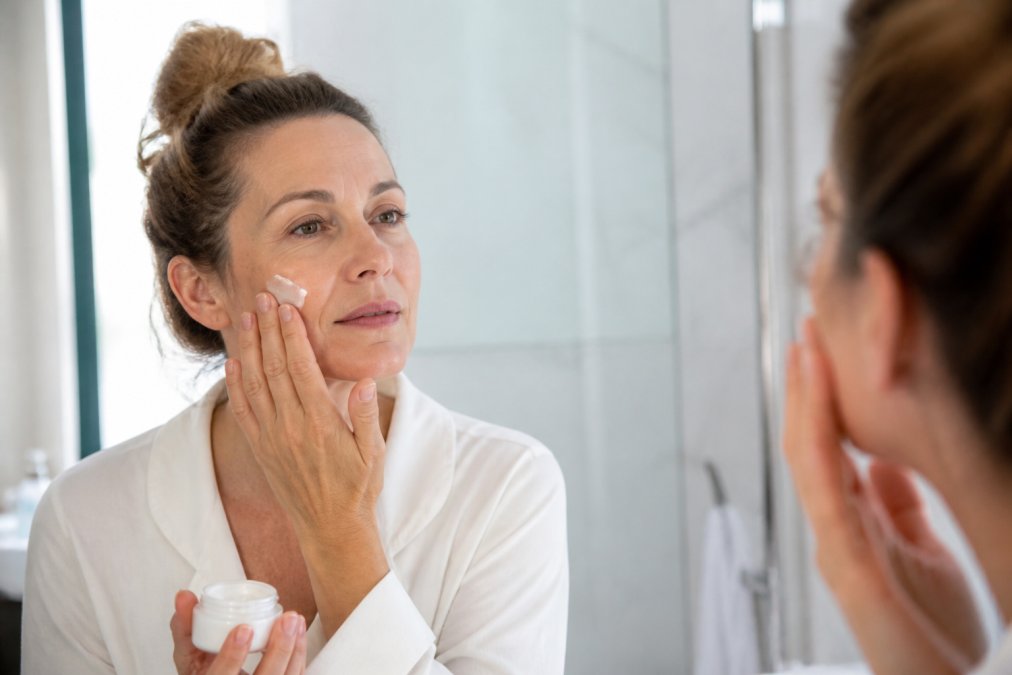
For broken, dry, or cracked areas, a targeted balm works better than a general moisturizer.

Skin Barrier Repair Timeline: What to Expect Week by Week
Most people see meaningful improvement within two to four weeks if they stop all irritating products on day one. How long it takes to repair damaged skin barrier depends heavily on how much damage accumulated and how consistently you stick to a minimal routine.
- Week 1: Stinging and tightness begin to ease. Redness may still be present.
- Week 2: Flaking subsides. Skin feels less reactive to water and temperature changes.
- Week 3-4: Moisture retention improves noticeably. Dullness lifts as hydration returns.
- Week 4-8: Barrier function stabilizes. You can begin reintroducing one active at low strength.
How to Repair a Damaged Skin Barrier for the Long Term
Long-term barrier health comes down to maintenance, not intensity. Once the acute damage has healed, the goal shifts from recovery to prevention, and the factors that keep a barrier strong are not all in a bottle.
A maintenance routine that actually holds.
- Keep actives to two or three products maximum, never stacked on the same night
- Reintroduce retinoids slowly, starting once weekly and building up over eight weeks
- Use sunscreen daily, since UV exposure degrades the lipid barrier over time
- Adjust for seasons, switching to richer textures in winter and lighter ones in summer
- Keep one barrier cream in rotation permanently, not just during flare-ups
- Watch lifestyle triggers, including high stress, poor sleep, and alcohol, all of which slow skin recovery
Frequently Asked Questions
How long does it take for the skin barrier to repair?
Most people see meaningful improvement in 2 to 4 weeks if they stop the irritant and stick to a gentle routine. Redness and stinging often calm within the first week, while flaking and tightness fade over the next two to three. Full recovery of the lipid barrier can take 6 to 8 weeks, especially if you had been over-exfoliating or using retinoids. The skin barrier repair timeline depends on how long the damage went on and how consistently you avoid triggers.
How do I tell if my skin barrier is damaged?
The clearest signs of a damaged skin barrier are persistent redness, stinging when you apply products that used to feel fine, tightness after washing, and flaky or rough patches that do not respond to moisturizer. Some people notice new sensitivity to ingredients they tolerated for years. If your skin reacts to lukewarm water or your usual gentle cleanser, the stratum corneum is likely compromised and needs a break from actives.
Can CBD-infused products help with skin barrier repair?
CBD-infused formulas repair damage, boost collagen production, and strengthen the skin barrier. GALYNA's patented lipid delivery technology ensures that active, CBD-infused ingredients penetrate deep into the skin. GALYNA's REPAIR Healing Balm combines hemp extract with naturally-derived lanolin to support the skin's natural barrier, reduce the appearance of existing scars, and prevent new scars from forming on dry patches and rough texture.
What ingredients should I avoid when my skin barrier is damaged?
Pause exfoliating acids (glycolic, lactic, salicylic), retinol and retinoid sensitization triggers, high-concentration vitamin C, and any product with added fragrance or essential oils. Also skip physical scrubs and cleansing brushes, which create micro-tears in an already weakened stratum corneum. Once your skin feels calm for two full weeks, you can reintroduce one active at a time, starting at the lowest strength and using it every third night.


