Table of Contents
- What Pharmaceutical Grade vs Cosmetic Skincare Actually Means
- The Legal Definition Problem: No FDA 'Medical Grade' Category
- FDA Regulation of Cosmetics vs Drugs: What the Law Really Says
- Skincare Ingredient Penetration Science: Why Molecular Weight Decides Everything
- Medical Grade Skincare Benefits: What the Evidence Supports
- Stability and Shelf-Life: The Testing Gap Most Brands Skip
- How to Choose: A Decision Framework for Your Skin
- Frequently Asked Questions
Last Updated: September 23, 2026
What Pharmaceutical Grade vs Cosmetic Skincare Actually Means
The phrase "pharmaceutical grade vs cosmetic skincare" describes a distinction that is mostly marketing, not law. In the United States, there is no official "pharmaceutical grade" or "medical grade" category for skincare. A product is either a cosmetic or a drug under federal rules, and those two categories carry very different requirements. This guide from GALYNA breaks down what the labels really mean, how ingredients actually reach the skin, and how to choose formulas that do more than sit on the surface.
Here is the uncomfortable truth most brands avoid: the words on the front of the jar are not regulated the way the words on a prescription bottle are.
The Legal Definition Problem: No FDA 'Medical Grade' Category
Pharmaceutical grade is not a legal term the FDA recognizes for skincare. The agency classifies products as cosmetics, drugs, or both under the Federal Food, Drug, and Cosmetic Act. A cosmetic is intended to cleanse, beautify, or alter appearance. A drug is intended to treat or prevent disease, or to affect the structure or function of the body.
Where 'Pharmaceutical Grade' Actually Comes From
The term has a real meaning, just not in skincare law. It originates in pharmaceutical manufacturing, where the United States Pharmacopeia-National Formulary (USP-NF) sets official monographs for raw materials. A USP-NF grade ingredient must meet defined identity, strength, quality, and purity tests. Those grades include:
- USP grade, meets the official monograph for a drug substance or excipient.
- NF grade, meets the official monograph for a pharmaceutical excipient.
- FCC grade, Food Chemicals Codex, used for food and some topical ingredients.
- Cosmetic grade, a trade designation, not a USP-NF monograph. Purity, residual solvents, and heavy-metal limits are set by the supplier, not a pharmacopeial standard.
The 2022 Law That Changed Cosmetic Oversight
The Modernization of Cosmetics Regulation Act of 2022 (MoCRA) is the biggest update to cosmetic oversight since 1938 (the FDA). It does not create a "pharmaceutical grade" category, but it does require cosmetic facilities to register with the FDA, list products, report serious adverse events, and substantiate safety. It also gives the FDA mandatory recall authority. That is meaningful, but it is still not pre-market drug approval, and it does not validate a "medical grade" label.
What This Means for the Label on Your Jar
A brand can legally print "pharmaceutical grade" on a cosmetic as puffery, as long as it does not cross into an unapproved drug claim. The phrase is not defined by the FDA, not enforced by the FTC as a standard, and not verified by any third party unless the brand voluntarily submits to one. The only label terms with legal teeth are "drug facts," "SPF," and approved active ingredient names.
FDA Regulation of Cosmetics vs Drugs: What the Law Really Says
Drugs face pre-market scrutiny; cosmetics largely do not. That is the core difference in FDA regulation of cosmetics versus drugs. Drug manufacturers must show safety and effectiveness before selling. Cosmetic makers, by contrast, are not required to get pre-market approval for most products or ingredients.
Skincare Ingredient Penetration Science: Why Molecular Weight Decides Everything
Skincare ingredient penetration science comes down to one blunt fact: if a molecule is too large, it stays on the surface. The skin is built to keep things out, and most actives never reach the dermal layers where collagen production and cellular turnover actually happen.
The Skin Barrier as a Gatekeeper
The skin barrier is the outermost layer of skin, a lipid matrix of ceramides, cholesterol, and free fatty acids arranged in a "brick and mortar" structure. It is selective by design. Active ingredients must be small enough, lipophilic enough, or carried by a delivery system to pass through. The three routes across are the intercellular lipid spaces, the transcellular path through corneocytes, and the appendageal route through hair follicles and sweat glands.

Why Raw-Material Grade Does Not Equal Penetration
Here is the gap most articles skip: a USP-grade active and a cosmetic-grade active of the same molecule have the same molecular weight. Grade affects purity, residual solvents, and heavy-metal content, not how well the molecule crosses the barrier. A USP-grade ascorbic acid at 176 Da and a cosmetic-grade ascorbic acid at 176 Da penetrate identically. What changes is irritation risk, batch consistency, and how much of the dose is actually the active versus manufacturing residue.
Stability and Shelf-Life: The Testing Gap Most Brands Skip
Formulation stability is the quiet test most brands never run. A product can be perfect on day one and useless by month six if its actives degrade, separate, or lose potency. Stability and shelf-life testing is expensive, and skipping it is invisible to the buyer.
Medical Grade Skincare Benefits: What the Evidence Supports
The benefits of medical grade skincare are real when the formula earns them, not when the label claims them. What matters is whether the product supports the skin barrier, delivers actives where they work, and holds up under testing.
A practical framework for judging any "medical grade" claim:
- Delivery system: Does the brand explain how actives reach the dermal layers?
- Clinical validation: Are there standardized testing results, or only testimonials?
- Ingredient purity: Is the source and grade of each active disclosed?
- Concentration levels: Are percentages stated, or hidden behind "proprietary blend"?
- pH balance: Is the formula matched to skin's natural acidity?
Stability and Shelf-Life: The Testing Gap Most Brands Skip
Formulation stability is the quiet test most brands never run. A product can be perfect on day one and useless by month six if its actives degrade, separate, or lose potency. Stability and shelf-life testing is expensive, and skipping it is invisible to the buyer.
How to Choose: A Decision Framework for Your Skin
Choosing between pharmaceutical grade vs cosmetic skincare labels is less useful than matching a formula to your actual skin. Use this decision matrix instead of the marketing copy.
| Your Skin Concern | What to Prioritize | Product Type to Look For |
|---|---|---|
| Compromised barrier, dryness | Barrier-repairing lipids, lanolin, ceramides | Rich balm or night crème |
| Fine lines, loss of elasticity | Collagen-supporting actives, delivery tech | Patented night formula |
| Reactive, sensitive skin | Non-irritating, fragrance-free formulas | Clinically tested cream |
| Persistent acne and dullness | Non-comedogenic, antibacterial support | Lightweight treatment crème |
| Muscle tension and aches | Multi-functional therapeutic formulas | Targeted relief cream |
Matching Formulas to Skin Concerns
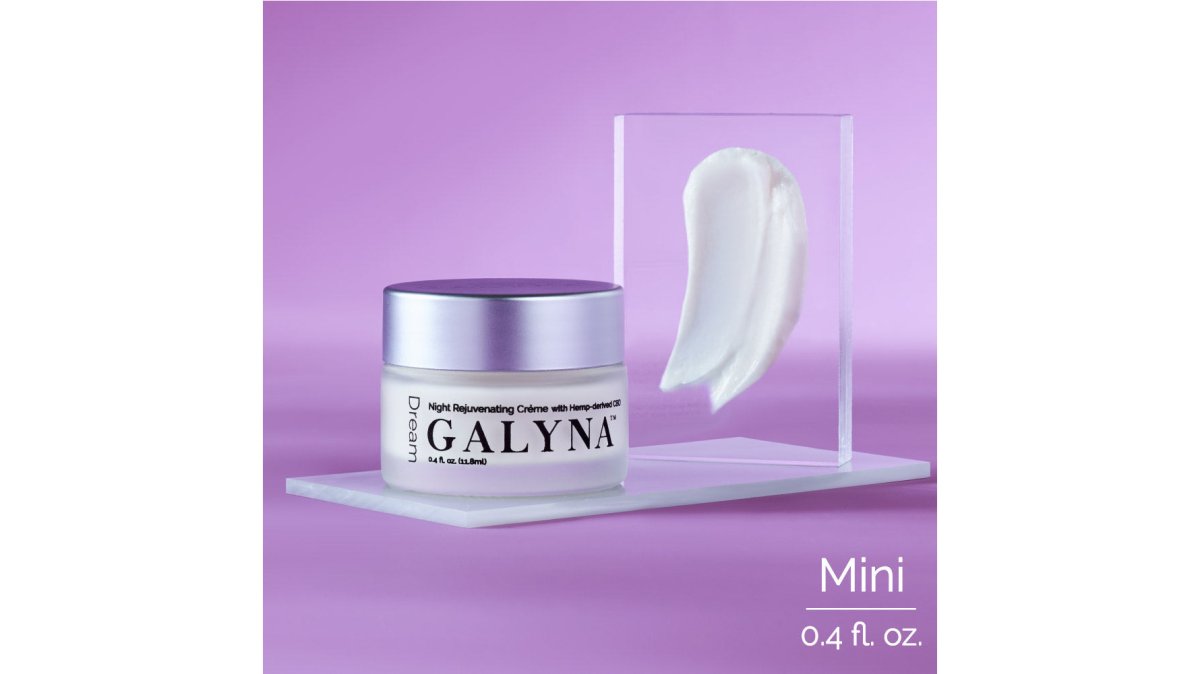
For sensitive or reactive skin, the priority is a formula classified as non-irritating, without parabens, harsh chemicals, or artificial fragrances. For aging concerns, look for delivery systems that carry collagen-supporting actives past the barrier. GALYNA's DREAM Night Rejuvenating Crème is built for overnight recovery, with Hemp Extract, Hyaluronic Acid, and Vitamins and Antioxidants working while you sleep. It comes in a 1.7 fl oz classic jar for $51.00 or a 0.4 fl oz mini jar for $20.00 if you want to test it first.
Frequently Asked Questions
Is there a legal definition for 'medical grade' skincare in the US?
No. The FDA does not recognize 'medical grade' or 'pharmaceutical grade' as official regulatory categories for skincare. A product is legally either a cosmetic, a drug, or a combination of both under the Federal Food, Drug, and Cosmetic Act. Any brand using 'medical grade' is using a marketing term, not a government classification. What matters is whether the formula meets drug-level standards for purity, concentration, and testing, regardless of what the label claims.
How does ingredient penetration differ between cosmetic and pharmaceutical skincare?
Cosmetic formulas often rely on ingredients that sit on the skin's surface, while pharmaceutical-grade formulas use delivery systems designed to carry actives past the skin barrier. Molecular weight is the deciding factor: compounds under 500 Daltons penetrate more readily. GALYNA's patented encapsulation technology delivers active ingredients with 8X increased bioavailability, as featured in the Essentials Mini Ritual set.
Can pharmaceutical-grade products be purchased without a prescription?
Yes. Most pharmaceutical-grade skincare is available over-the-counter. The 'pharmaceutical grade' label refers to the purity and concentration standards used during manufacturing, not to prescription status. Prescription-strength products like tretinoin require a doctor's order, but many high-performance formulas with pharmaceutical-grade ingredients, including GALYNA's DREAM Night Rejuvenating Crème, are sold directly to consumers without one.
Does medical grade skincare really make a difference compared to drugstore products?
It depends on the formulation, not the label. Medical grade skincare benefits come from higher concentrations of active ingredients, standardized testing for purity, and delivery systems that improve absorption. A product with 0.1% retinol in a basic cream will not outperform a well-formulated 1% retinol with encapsulation. Look for clinical validation, patents, and independent lab testing rather than trusting the 'medical grade' claim alone.
What should I look for on a label to tell if a product is truly pharmaceutical grade?
Check for a Certificate of Analysis (COA), which shows third-party testing for purity and potency. Look for specific concentration percentages of active ingredients, not just ingredient names. A US patent number, like GALYNA's US Patent #12,337,054 for DREAM Night Rejuvenating Crème, signals that the formulation or delivery method was novel enough to pass federal review. Clinical trial data and dermatologist-recommended status are stronger signals than the phrase 'pharmaceutical grade' itself.
The real challenge is not decoding labels but finding a formula that actually reaches your skin's dermal layers and supports its barrier. GALYNA builds products around that goal, with patented lipid delivery technology, pharmaceutical-grade formulations, and clinically validated efficacy backed by US Patent #12,337,054. If you are tired of serums that sit on top of your skin, get started with GALYNA's Essentials Mini Ritual and see what a delivery system designed for penetration can do.


