
Table of Contents
- Skincare for 50 Year Old Skin: What Changes After Menopause
- A Skincare Routine for Women Over 50: Morning and Evening Steps
- The Best Moisturizer for Mature Skin: What to Look For
- Retinol for Mature Skin: How to Start Without Irritation
- How to Reduce Age Spots and Wrinkles: Ingredients That Work
- Exfoliation and Skin-Cell Turnover After 50
- Daily Sun Protection: The Non-Negotiable Step
- Conclusion: Building a Routine That Lasts
- Frequently Asked Questions
Last Updated: October 12, 2026
Skincare for 50 Year Old Skin: What Changes After Menopause
Skincare for 50 year old skin has to account for one fact that most generic routines ignore: estrogen decline accelerates collagen loss, thins the skin, and weakens the barrier. According to the American Academy of Dermatology's guidance on aging skin, menopause-related changes make mature skin drier, less elastic, and slower to recover.
At GALYNA, we formulate around exactly this problem: pharmaceutical-grade actives delivered through patented lipid delivery technology so they actually reach the deeper layers where collagen is built.
Below, we break down what genuinely changes after menopause, how to build a morning and evening routine, and which ingredients earn their place in 2026.
A Skincare Routine for Women Over 50: Morning and Evening Steps
A skincare routine for women over 50 is a four-step morning sequence and a three-step evening sequence, repeated daily. Consistency matters more than the number of products. Most dermatologists recommend keeping it to a handful of well-chosen formulas rather than a ten-step regimen.
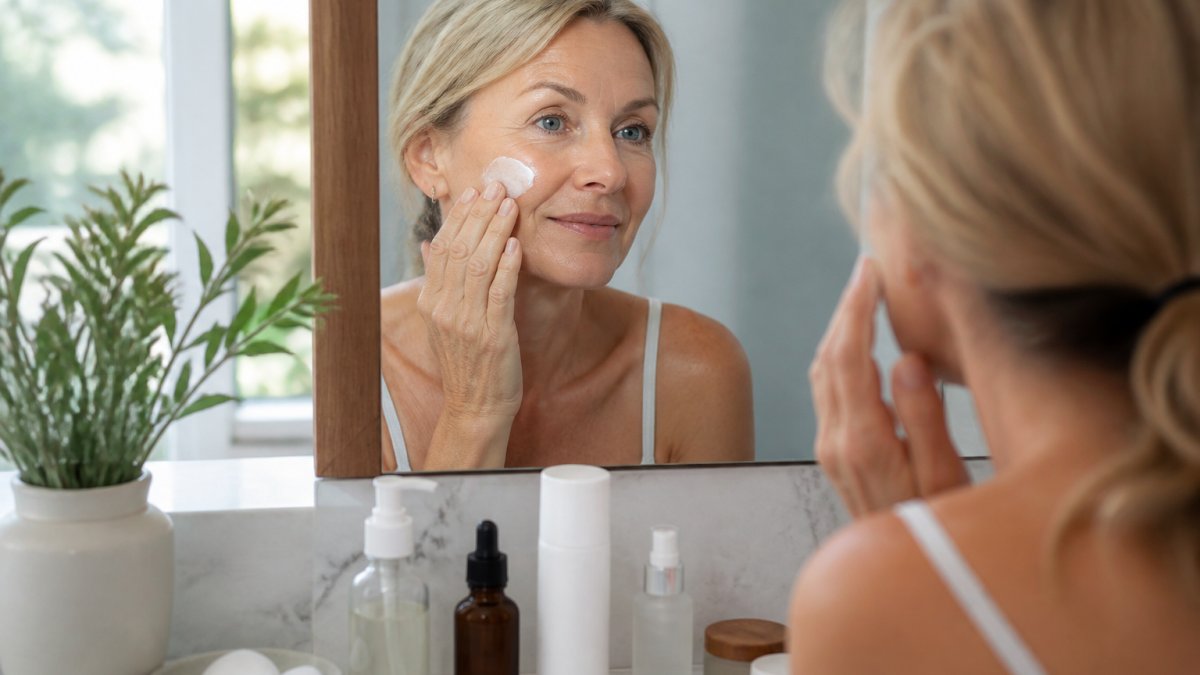
Morning Routine: Cleanse, Treat, Moisturize, Protect
- Cleanse with a gentle, non-foaming cleanser. Hot water and harsh surfactants strip the barrier further. If your skin feels tight after cleansing, the cleanser is too strong, not your skin.
- Treat with an antioxidant serum, typically vitamin C, on dry skin. If vitamin C stings, switch to a gentler derivative such as sodium ascorbyl phosphate or tetrahexyldecyl ascorbate.
- Moisturize while skin is still slightly damp to lock in hydration. A humectant serum under a cream works better than a heavy cream alone.
- Protect with broad-spectrum sunscreen, every single morning. SPF 30 is the floor, not the ceiling.
Evening Routine: Repair and Replenish Overnight
Evening is when skin does its repair work, so this is where your most active ingredients belong.
- Remove sunscreen and makeup with a gentle cleanser. A double cleanse with an oil or balm first is worth it if you wear long-wear SPF.
- Treat with a retinoid or targeted serum on alternating nights. Never stack a retinoid and an exfoliating acid on the same night when you are starting out.
- Seal with a nourishing night cream to support overnight recovery. On retinoid nights, apply the cream first if your skin is reactive.
Adjust the Same Routine by Skin Type
This is the part most guides leave out. The steps stay the same; the formulas and frequency change.
| Skin Type | Cleanser | Morning Active | Evening Active | Moisturizer |
|---|---|---|---|---|
| Dry | Cream or milk cleanser | Vitamin C derivative | Retinoid 2x weekly, build up | Rich cream with ceramides and lanolin |
| Oily | Gel cleanser, no sulfates | Niacinamide serum | Retinoid 3x weekly | Light gel-cream with hyaluronic acid |
| Sensitive | Fragrance-free cream cleanser | Skip actives; moisturize and SPF | Retinal 1x weekly, buffered | Barrier cream with ceramides |
| Rosacea-prone | Lukewarm water rinse or milky cleanser | Azelaic acid if tolerated | Skip retinoid until calm; use niacinamide | Gentle cream, no essential oils |
A Minimal Effective Routine on a Budget
You do not need twelve products. A workable routine can be built from four items: a gentle cleanser, a vitamin C or niacinamide serum, a barrier moisturizer, and a broad-spectrum SPF 30 or higher. Choose by ingredient and function, not by brand or price. A drugstore ceramide cream and a department-store ceramide cream do the same job if the ingredient list is comparable. Add a retinoid once the first four steps are consistent for a month.
The Best Moisturizer for Mature Skin: What to Look For
The best moisturizer for mature skin does three jobs at once: it restores lipids, holds water, and supports the barrier. Texture matters less than ingredients.
GALYNA's DREAM Night Rejuvenating Crème combines hyaluronic acid with hemp extract, lavender essential oil, and a blend of vitamins and antioxidants. It's built to boost collagen production, reduce the look of fine lines, and replenish the lipids mature skin loses.

A common mistake is buying the heaviest cream available. Weight doesn't equal effectiveness. What matters is whether the actives penetrate rather than sitting on the surface.
Retinol for Mature Skin: How to Start Without Irritation
Retinol for mature skin works, but only if you introduce it slowly and know what to do when your skin pushes back. Most practitioners find that the failure mode is not the ingredient itself but the pace of introduction and the lack of a recovery plan.
Patch Test First
Before applying a retinoid to your face, patch test on the inner forearm or behind the ear for three to five nights. If you see redness, itching, or peeling in that small area, your face will react more strongly. Wait, then try a lower concentration or a gentler retinoid ester.
A Realistic Introduction Schedule
- Weeks 1-2: Apply a pea-sized amount of a low-concentration retinol (commonly 0.1% to 0.3%) twice a week at night.
- Weeks 3-4: If no irritation, move to every third night.
- Weeks 5-8: Move to every other night.
- Week 9 and beyond: Only increase frequency or concentration if your skin is calm. Many people never need to go past every other night.
Layering Order That Reduces Irritation
- Cleanse and wait until skin is completely dry. Applying a retinoid to damp skin increases penetration and irritation.
- Apply a thin layer of moisturizer first (buffering), then the retinoid on top. This slows absorption without cancelling the benefit.
- Follow with a second layer of moisturizer if your skin is dry.
- Skip exfoliating acids, vitamin C, and benzoyl peroxide on the same night.
What to Do If Irritation Happens
Signs you are moving too fast: stinging, flaking, or redness that lasts more than a day. If that happens, pause the retinoid for five to seven days, focus on a bland barrier cream, and restart at half the previous frequency. Do not try to push through it. A damaged barrier makes every other active in your routine sting, including vitamin C and sunscreen.
If your skin is reactive, retinal and retinoid alternatives such as bakuchiol may suit you better. Whichever you choose, pair it with consistent moisturizing, because retinoids thin the outer layer before thickening the deeper skin over time.
When to See a Dermatologist
Routine retinoid purging, mild flaking, and transient redness are normal. See a dermatologist if you have persistent burning, blistering, a rash that spreads, or a spot that changes in size, shape, or color. Also see one if a new spot appears and does not heal within a few weeks. Those are not routine cosmetic concerns.
How to Reduce Age Spots and Wrinkles: Ingredients That Work
Learning how to reduce age spots and wrinkles comes down to three ingredient categories: retinoids for cell turnover, antioxidants for environmental damage, and pigment-targeting actives for uneven tone. No single product does all three well.
DREAM Night Rejuvenating Crème (Classic Jar) →
| Concern | Ingredient Category | How It Helps | Best Used |
|---|---|---|---|
| Fine lines and wrinkles | Retinoids | Support collagen and cell turnover | Evening |
| Age spots and dark spots | Vitamin C, niacinamide | Even skin tone over time | Morning |
| Dryness and barrier loss | Hyaluronic acid, lanolin | Restore hydration and lipids | Morning and evening |
| Dullness | Gentle exfoliating acids | Lift dead surface cells | 1-2 times weekly |
Realistic expectations matter here. Most ingredients need eight to twelve weeks of consistent use before you see meaningful change. Anyone promising overnight results is selling something else.
Exfoliation and Skin-Cell Turnover After 50
Skin-cell turnover slows with age, which is why mature skin looks dull even when it's well moisturized. Gentle, regular exfoliation helps, but overdoing it damages the barrier you're trying to protect.
Chemical exfoliants are generally kinder than scrubs for skin in your 50s. A beta hydroxy acid, such as salicylic acid, suits oily and acne-prone skin. Lactic acid suits drier, more sensitive skin.
If your skin is compromised, stop exfoliating until the barrier recovers. Adding acids to a damaged barrier makes redness and sensitivity worse.
Daily Sun Protection: The Non-Negotiable Step
Daily broad-spectrum sunscreen is the single most effective anti-aging step in any routine. UV exposure drives the majority of visible aging, including age spots, uneven skin tone, and loss of firmness (the EPA). The Skin Cancer Foundation's sun protection guidance recommends broad-spectrum SPF 30 or higher, reapplied every two hours outdoors.
Choose a formula you'll actually wear daily. A moisturizing sunscreen with SPF 30 beats a chalky SPF 50 you avoid. If you use a retinoid, sun protection isn't optional; it's what makes the results hold.
Conclusion: Building a Routine That Lasts
The hardest part of skincare after 50 isn't finding ingredients. It's staying consistent long enough to see results while your barrier is more fragile than it used to be.
GALYNA builds formulas for exactly this stage. Our DREAM Night Rejuvenating Crème uses patented lipid delivery technology to carry collagen-supporting actives deeper, while hemp extract and hyaluronic acid restore the hydration mature skin loses. Our REPAIR Healing Balm supports compromised, damaged skin with hemp extract and naturally derived lanolin.

Try our starter pack today and give your skin the barrier support it needs to make every other step work harder.
Frequently Asked Questions
What is the best skincare routine for a 50-year-old?
A consistent routine should include gentle cleansing, targeted serums (like antioxidants and retinoids), a rich moisturizer, and daily broad-spectrum sunscreen. In the morning, cleanse, apply an antioxidant serum, moisturize, and finish with SPF 30 or higher. At night, cleanse, apply a retinoid or peptide treatment, and seal in hydration with a nourishing night cream. Adjust based on your skin type and sensitivity.
Which skincare ingredients are best for skin over 50?
Look for hyaluronic acid for hydration, retinoids (retinol or retinal) for fine lines and cell turnover, antioxidants like vitamins C and E for environmental protection, and niacinamide for barrier support and uneven tone. For age spots, ingredients like vitamin C, retinoids, and exfoliating acids can help. A moisturizer with ceramides or lipids, such as GALYNA's DREAM Night Rejuvenating Crème, supports the skin barrier overnight.
How can I improve dry skin after 50?
Dryness after 50 often stems from reduced oil production and a compromised skin barrier. Use a gentle, non-foaming cleanser, avoid hot water, and apply a hydrating serum with hyaluronic acid to damp skin. Follow with a rich moisturizer that contains lipids or ceramides. A healing balm like GALYNA's REPAIR can help with dry patches. Running a humidifier and drinking enough water also support hydration from within.
Should I use retinol if I have sensitive skin?
Yes, but start slowly. Choose a low-concentration retinol or a gentler retinal, and apply it once or twice a week initially. Buffer with moisturizer before or after to reduce irritation. Avoid combining with other exfoliating acids on the same night. If redness or peeling persists, reduce frequency or consult a dermatologist. Many sensitive-skin formulations now include soothing ingredients to improve tolerance.
How often should I exfoliate mature skin?
Mature skin typically benefits from exfoliation once or twice a week, depending on sensitivity. Use gentle chemical exfoliants like lactic acid or mandelic acid rather than harsh scrubs. Over-exfoliating can damage the skin barrier and increase dryness. If you use a retinoid, you may need to exfoliate less often. Always follow with moisturizer and sunscreen.
Can skincare reduce age spots and wrinkles?
Skincare can visibly reduce the appearance of age spots and fine lines, though results take time and consistency. Retinoids, vitamin C, and exfoliating acids can fade dark spots and smooth texture. Wrinkles may soften with consistent use of collagen-supporting ingredients and daily sun protection. For deeper wrinkles or persistent spots, in-office procedures may be needed. Set realistic expectations: improvements are gradual, often over 8 to 12 weeks.
Not intended to diagnose, treat, cure or prevent any disease. If pregnant or nursing, please consult with your doctor prior to use.


