
Table of Contents
- Understanding Acne on Sensitive Skin
- Build a Gentle Acne Routine for Sensitive Skin
- Choosing the Right Active Ingredients
- How to Use Salicylic Acid on Sensitive Skin
- How to Use Benzoyl Peroxide on Sensitive Skin
- How Long Does Acne Treatment Take to Work
- Managing Irritation and Knowing When to Escalate Care
- Frequently Asked Questions
Last Updated: October 13, 2026
Understanding Acne on Sensitive Skin
Acne on sensitive skin is a unique challenge: your skin reacts to most products, yet acne-prone skin needs active treatment. Balancing the two is one of the toughest skincare situations to navigate.
Sensitive skin means a weakened barrier that loses moisture faster and reacts to ingredients that don't bother others.
The good news: you can treat acne sensitive skin with patience, lower concentrations, and a strategic approach.
Build a Gentle Acne Routine for Sensitive Skin
A routine to treat acne sensitive skin has two non-negotiable elements: a gentle cleanser and a hydrating moisturizer. Everything else builds around them.
Your skin barrier needs support, not stripping. Many people with sensitive skin skip moisturizer, thinking it worsens acne, that's backwards.
The structure is simple: cleanse, treat, moisturize, morning and evening, with one key difference at night.
Morning Routine Steps
-
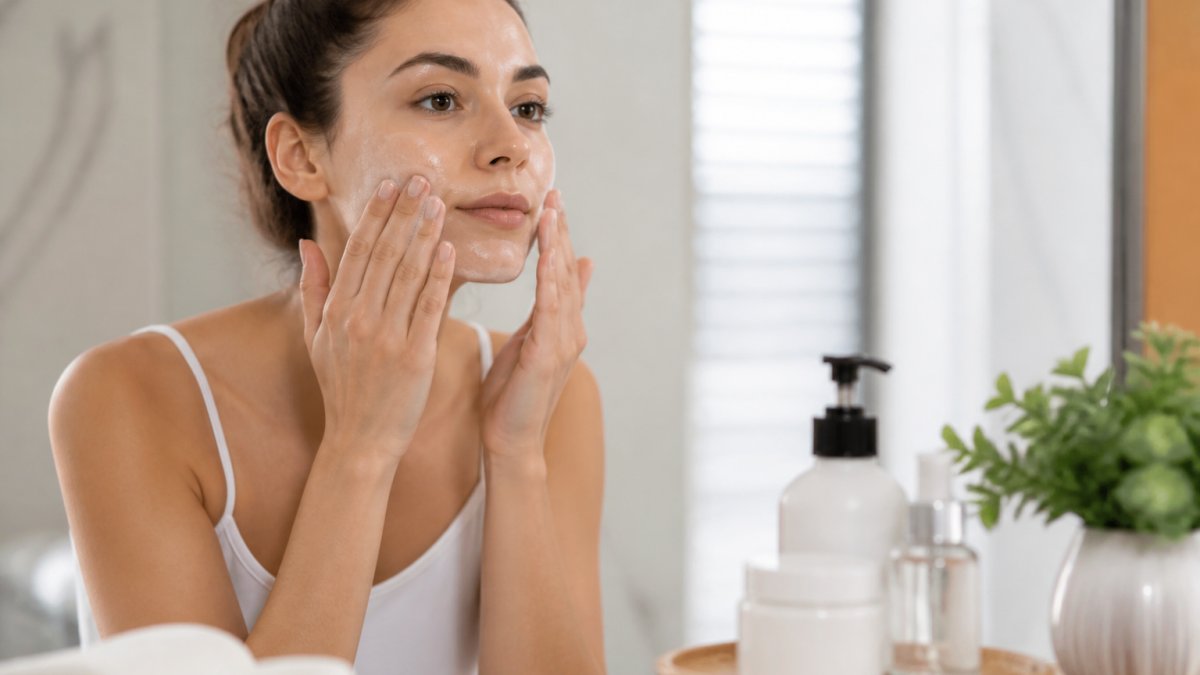
Cleanse with a gentle, non-stripping cleanser. Use lukewarm water, not hot. Massage 30 seconds, rinse, and pat dry, don't rub.
-
Apply a lightweight moisturizer. Look for hyaluronic acid, glycerin, or ceramides, they repair the barrier without clogging pores. Apply to damp skin.
-
Use sunscreen if you're introducing actives. Many acne treatments increase sun sensitivity. A broad-spectrum SPF 30 minimum is non-negotiable.
Evening Routine Steps
-
Cleanse again with the same gentle cleanser to remove the day's oil, bacteria, and debris.
-
Wait 5-10 minutes for skin to dry. Applying actives to wet skin increases irritation risk.
-
Apply your active ingredient. Introduce salicylic acid, benzoyl peroxide, adapalene, or another acne fighter. Start low, go slow. More below.
-
Wait another 5-10 minutes before moisturizing. Once the active dries, apply your moisturizer.
-
Consider a richer night cream. Your skin repairs itself at night, and a heavier moisturizer supports this. GALYNA's DREAM Night Rejuvenating Crème combines hydration with ingredients that support skin recovery and help reduce acne-causing bacteria while you sleep.

DREAM Night Rejuvenating Crème (Classic Jar)
Choosing the Right Active Ingredients
Not all acne fighters are equal for sensitive skin. Your choice depends on your acne type and reactivity, but how you introduce an ingredient matters more than which one you pick. Most irritation comes from speed, not the molecule.
Start with the gentlest options. If your skin tolerates them, move to stronger actives, jumping to the strongest likely triggers irritation and worsens acne.
A simple order of operations
Think of actives as a ladder, not a menu:
- Azelaic acid (10%), anti-inflammatory and antibacterial, generally the best-tolerated prescription-strength option for reactive skin. Often the right first active if your skin stings easily.
- Niacinamide (2-5%), not a true acne active, but it calms redness and supports the barrier, making everything else easier to tolerate.
- Salicylic acid (0.5-1%), best for blackheads and clogged pores. Works inside the pore.
- Adapalene (0.1%), the most tolerable OTC retinoid, best for comedonal and mild inflammatory acne.
- Benzoyl peroxide (2.5%), most effective against inflammatory acne, most irritating. Save it for when gentler rungs fail.
You don't need to climb the whole ladder. Many people with sensitive skin get clear on rungs 1-3 and never touch benzoyl peroxide.
The one-active-at-a-time rule
Start with one active. Do not layer multiple actives on sensitive skin, salicylic acid plus benzoyl peroxide plus a retinoid equals a damaged barrier. Pick one, master it, and only add a second after four to six weeks of irritation-free use.
When you add a second, alternate, don't stack. Salicylic acid in the morning and adapalene at night is a common, tolerable pairing. Applying both at once is not.
Patch test before you commit
A patch test tells you whether your skin will tolerate a product before it hits your whole face. Do it with every new active:
- Pick a small test area. The side of your jaw or behind your ear works. Avoid the eye area.
- Apply a pea-sized amount at full strength, don't dilute it, or you won't learn anything useful.
- Leave it 24 hours, then check for redness, swelling, itching, or burning that doesn't fade within an hour.
- If clear, repeat for 2-3 more days on the same spot before applying to your full face.
- If you react, stop. A reaction during patch testing is your skin telling you the answer. Don't push through it.
The frequency ramp
Once a product passes its patch test, introduce it slowly:
- Week 1-2: Apply twice per week, on non-consecutive nights.
- Week 3-4: If no irritation, move to every other night.
- Week 5+: If still clear, move to nightly or near-nightly use.
If irritation appears, drop back to the previous frequency for two weeks before advancing again. There's no prize for speed, those who clear fastest usually went slowest at the start.
What to skip entirely
Some ingredients and habits aren't worth the risk on reactive skin:
- Physical scrubs with walnut shell or coarse beads, they create microtears that inflame acne.
- Alcohol-based toners and astringents, they strip the barrier and trigger rebound oil.
- Fragrance and essential oils in leave-on products, common triggers for contact dermatitis.
Matching the active to your acne type
- Mostly blackheads and clogged pores: salicylic acid or adapalene.
- Red, inflamed bumps and pustules: azelaic acid first; benzoyl peroxide if azelaic acid isn't enough.
- A mix of both: alternate salicylic acid and azelaic acid on different nights.
If you're pregnant, breastfeeding, or taking prescription medication, check with a clinician before starting any active. Some retinoids aren't considered safe during pregnancy, and some oral medications interact with topicals.
How to Use Salicylic Acid on Sensitive Skin
Salicylic acid exfoliates inside the pore, dissolving the sebum and dead skin cells that clog it.
Start at 0.5% to 1%.
Use it two to three times per week initially, not daily.
DREAM Night Rejuvenating Crème (Classic Jar) →
Apply a thin layer to acne-prone areas only, your T-zone or wherever breakouts concentrate.
Watch for irritation: excessive dryness, flaking, redness that doesn't fade, or burning.
How to Use Benzoyl Peroxide on Sensitive Skin
Benzoyl peroxide kills acne bacteria directly.
Start at 2.5%, not 5% or 10%. The lower dose works nearly as well with far less irritation.
Use it once daily, in the evening only. Morning application increases sun sensitivity. Apply a thin layer to affected areas.
Expect initial dryness and mild redness in the first week.
Benzoyl peroxide can cause contact dermatitis in sensitive skin.
How Long Does Acne Treatment Take to Work
Weeks 1-2: Increased dryness or mild irritation is normal. Your skin is adjusting.
Weeks 3-4: Breakouts may worsen slightly as bacteria die and dead skin cells shed.
Weeks 5-8: New breakouts decrease, existing blemishes heal faster, and redness fades.
Weeks 9-12: Full results appear, clearer skin, improved texture, and less frequent, less severe breakouts.
Patience isn't optional. Switching treatments every two weeks guarantees failure.
Managing Irritation and Knowing When to Escalate Care
Even with a careful introduction, irritation happens. What matters is the next 48 hours. Most people make it worse by pushing through or quitting the active entirely, neither is necessary.
Step 1: Triage the reaction
Before changing anything, figure out what you're looking at. Three things look similar and require very different responses.
Irritation is a barrier problem. It builds gradually over days. Signs:
- Mild redness that fades within an hour of application
- Light dryness, flaking, or tightness
- Slight stinging during application that subsides
Allergy (contact dermatitis) is an immune response. It appears suddenly, often after a product you've used before without issue. Signs:
- Severe redness that doesn't fade
- Swelling, hives, or a rash spreading beyond where you applied the product
- Intense itching or burning that doesn't stop
A purge is neither, it's the active working. Signs:
- Breakouts appear in the same areas you normally break out
- Small, shallow bumps rather than deep cysts
- Starts in weeks 2-4 and resolves by week 6-8
Step 2: Stop, recover, restart
If you've identified irritation, run this protocol:
- Pause the active immediately. Not forever, just until your barrier recovers.
- Strip your routine to three products: gentle cleanser, barrier moisturizer, sunscreen. No exfoliants, other actives, or toners.
- Wait 5-7 days. Redness, flaking, and stinging should fade. If they don't, see a clinician.
- Restart at half the frequency you were using. If you applied every other night, restart twice a week.
- Rebuild slowly. Add one night per week every two weeks, only if skin stays calm.
If you've identified an allergy, do not restart. Stop the product permanently and note the ingredient. If the reaction is severe, swelling, hives, or a rash covering a large area, seek medical care.
Step 3: Support the barrier while you recover
Recovery isn't passive. These steps shorten it:
- Cleanse once at night only during recovery. Rinse with lukewarm water in the morning.
- Apply moisturizer to damp skin within 60 seconds of cleansing to trap water.
- Look for ceramides, panthenol, colloidal oatmeal, or squalane, well-studied barrier supporters.
A stripped barrier typically takes one to two weeks to fully recover. Rushing back to actives restarts the cycle.
When to see a dermatologist
Some situations need professional evaluation rather than another over-the-counter experiment:
- No improvement after 12 weeks of consistent, correctly applied treatment.
- Severe, cystic, or scarring acne, these often need prescription options like oral antibiotics, isotretinoin, or hormonal therapy that OTC products can't match.
- Sudden onset in adulthood, especially along the jawline, often points to a hormonal driver.
The mindset that actually works
Sensitive skin rewards restraint. People who clear their skin are rarely the ones who tried the most products, they're the ones who found one tolerable routine and stayed on it long enough to see results. Irritation is information, not failure. Treat it as a signal to slow down, not give up.
Frequently Asked Questions
Which acne treatments are best for sensitive skin?
Start with low-concentration active ingredients: 0.5-1% salicylic acid, 2.5% benzoyl peroxide, or azelaic acid. Niacinamide and adapalene (a gentler retinoid) are also well-tolerated. The key is introducing one active at a time and building up frequency gradually. Avoid high-strength treatments and multiple actives simultaneously, as this increases irritation risk. Always patch test first and use a supportive moisturizer like GALYNA's DREAM Night Rejuvenating Crème, which hydrates and nourishes while you treat acne-prone areas.
How long does acne treatment take to work on sensitive skin?
Most acne treatments require 6-8 weeks to show visible improvement, though some people see results in 4 weeks. Sensitive skin may respond more slowly because you're using lower concentrations and introducing products gradually. Consistency matters: use your treatment as directed without skipping days. If you see no improvement after 8-12 weeks, or if irritation worsens, consult a dermatologist. Patience and a steady routine yield better results than aggressive treatment that damages your skin barrier.
How do you treat acne without stripping your skin?
Use a gentle, non-stripping cleanser; avoid over-washing or harsh scrubbing. Apply active ingredients (salicylic acid, benzoyl peroxide) to dry skin only, in small amounts, and start with the lowest concentration. Always follow with a hydrating moisturizer to restore the skin barrier. Hyaluronic acid and glycerin provide hydration without heaviness. GALYNA's DREAM Night Rejuvenating Crème contains hyaluronic acid and nourishing ingredients to replenish essential lipids and support barrier repair while you treat acne. Skip products with fragrance, alcohol, or sulfates.
What's the difference between irritation, allergy, and an acne flare when treating sensitive skin?
Irritation causes redness, dryness, stinging, or peeling at the site of application and typically improves when you reduce frequency or concentration. An allergic reaction causes itching, swelling, hives, or widespread redness beyond the treated area and requires immediate product discontinuation. An acne flare is a temporary increase in breakouts (usually within the first 2-4 weeks) as dead skin cells and bacteria are shed, this is normal and resolves with continued use. If you experience severe burning, blistering, or breathing difficulty, seek medical attention.


